

Some content spreads because it’s flawless. Some because it shocks.
But the most powerful kind? The kind people pull others into without thinking.
That’s exactly where the Who’s Most Likely To game lives.
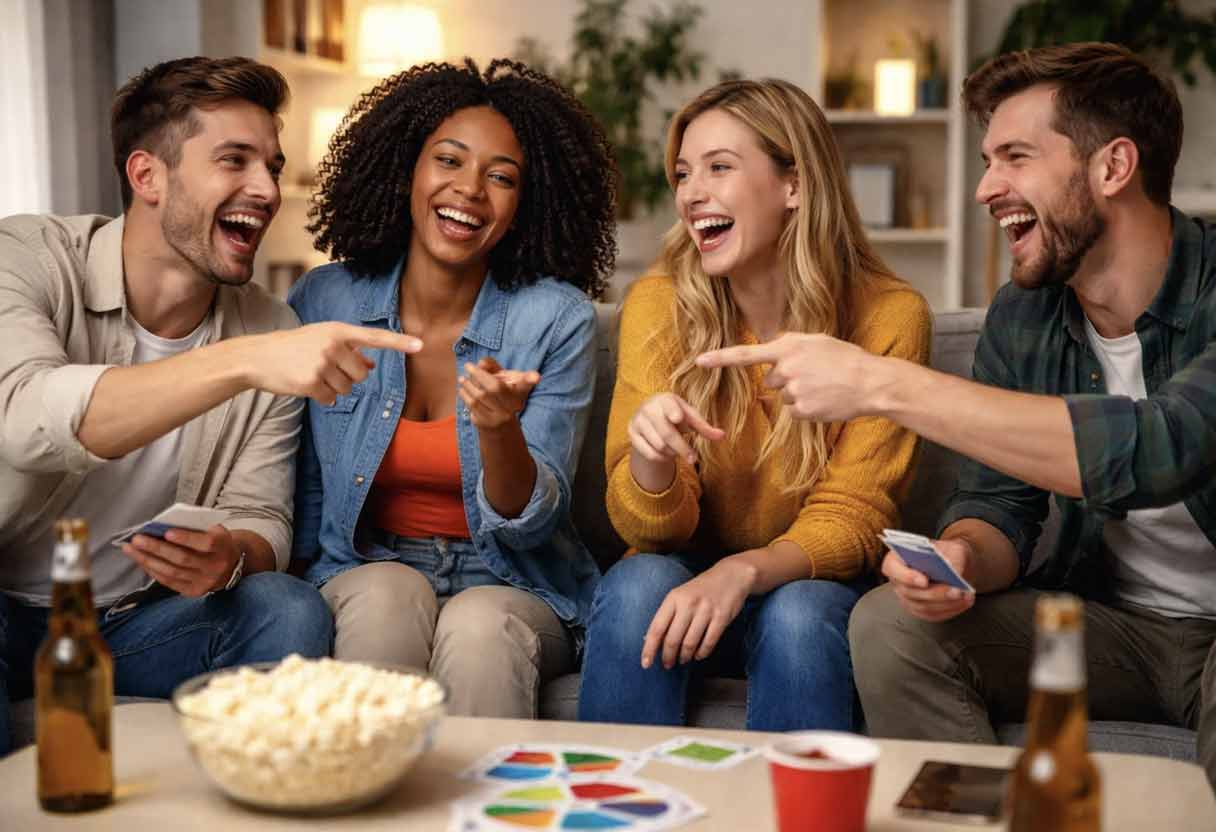
It doesn’t demand attention — it earns it. With laughter. Callouts. That one friend shouting, “No, this is literally you.”
If you’ve scrolled TikTok, Reels, or even a Close Friends story lately, you’ve seen it play out:
One person drops a prompt. Another points. Someone protests too loudly. Someone else screenshots “for later.”
The moment expands before anyone decides it should.
And in 2026 — when people are archiving Stories, muting DMs for peace, and living inside “private playlists” — it’s wild that the messiest, most human formats are still the ones that spread fastest.
“Shareable content isn’t about perfection — it’s about participation.”
This guide unpacks why Who’s Most Likely To refuses to fade, what it teaches about making content that travels, and how to adapt it for every group: friends, couples, families, work teams, and everything in between.
Why Simple Games Like Who’s Most Likely To Spread Fastest
Simple always wins. Every time.
The Who’s Most Likely To format works because it’s frictionless — one sentence of setup, instant payoff.
No overthinking. No rules. No “Wait, what do we do again?”
You can join mid-game and still feel part of the chaos.
That’s the magic. In content terms, it’s gold dust.
When someone understands a format in under a second, they don’t hesitate — they react. And reactions are what fuel sharing.
Simplicity doesn’t mean shallow. Each prompt unlocks laughter, memories, micro-embarrassments, and inside jokes — all the raw materials of connection.
“Simple formats go viral because people don’t have to think — they just feel.”
Why the Game Triggers Laughter — and Instant Emotion
Laughter’s still the fastest bridge between strangers and friends.
It softens edges, opens people up, and makes a moment repeatable.
That’s why Who’s Most Likely To thrives. It’s zero stakes, high emotion.
Someone gets roasted. Someone mock-offended. Someone else can’t stop laughing. Suddenly, there’s a story people will retell tomorrow.
Emotion → Interaction → Sharing.
That’s the entire virality loop.
On TikTok right now, the most reshared Reels aren’t the polished ones — they’re couples on their couch arguing over who’s most likely to forget dinner plans.
Human > perfect. Every single time.
“People don’t share content. They share how it made them feel.”
How Relatable Prompts Turn into Shareable Moments
Relatability is the engine behind virality.
The strongest Who’s Most Likely To prompts mirror real behavior — the tiny habits we all deny but secretly know are true:
- Overthinking a text
- Losing keys weekly
- Being late even when you wake up early
- Taking 50 photos, posting one
It’s not cleverness that hooks people — it’s recognition.
The moment someone spots themselves (or their friend) in a prompt, they’re in. No imagination needed.
“Relatable beats clever every day of the week.”
Why It Performs So Well in Reels, Stories, and Posts
On social media, speed is everything.
The window to capture attention is a blink.
That’s why Who’s Most Likely To works across every platform:
one prompt per slide, one reaction per clip, one emotion per post.
You don’t have to explain anything — it’s obvious from the first second.
Creators remix prompts with trending audios, “pause-and-point” filters, duet chains, or story polls.
It’s frictionless, adaptable, endlessly loopable — the trifecta of 2026 virality.

Why Group Participation Makes Content Travel
This format thrives on chemistry — not polish.
Inside jokes. Playful rivalry. The quiet observer suddenly delivering the funniest line.
That group energy transforms content from watched to shared.
Watching → Laughing → Joining.
That’s the path to belonging — and belonging travels.
“Shareability is just belonging in motion.”
Prompts That Always Hit
For Friends & Group Chats
Because every group has that one person.
😂 Who’s most likely to reply after three days?
🍕 Who’s most likely to eat everyone’s leftovers?
⏰ Who’s most likely to be late to their own birthday?
🎤 Who’s most likely to sing when nobody asked?
🧠 Who’s most likely to overthink a text?
2026 added a new one to that lineup: the friend who never pays you back.
Zelle’s Early Warning surveyed Gen Z this summer and found 76% of people who fronted cash for a group trip or dinner were never fully paid back. That’s not a niche complaint — it’s basically everyone’s group chat.
Which is exactly why “Who’s most likely to forget to Venmo you back” lands the second you say it out loud. Nobody has to think about who fits — everybody already knows.
For Game Nights & Parties
Chaos meets charm.
🎶 Who’s most likely to control the playlist?
🍹 Who’s most likely to mix the strongest drink?
🕺 Who’s most likely to dance without music?
📢 Who’s most likely to shout “one more round”?
🥳 Who’s most likely to keep the party alive?
For Couples
Flirtation disguised as a game.
❤️ Who’s most likely to say “I’m fine” first?
📱 Who’s most likely to forget to reply?
🍿 Who’s most likely to pick the movie?
🎁 Who’s most likely to plan surprises?
😴 Who’s most likely to fall asleep first?
Couples post these privately now — in shared Notes, Close Friends lists, or quiet corners of joint playlists. It’s connection disguised as content.
For Families
Simple, safe, universal.
🍪 Who’s most likely to snack before dinner?
📸 Who’s most likely to take family photos?
📺 Who’s most likely to control the TV remote?
🧹 Who’s most likely to avoid chores?
❤️ Who’s most likely to hug first?
For Teens
Because chaos is the language of friendship.
📱 Who’s most likely to stay up all night?
🎧 Who’s most likely to live in headphones?
📚 Who’s most likely to forget homework?
😂 Who’s most likely to laugh in class?
☕ Who’s most likely to need energy drinks?
This fits perfectly into the 2026 trend of “micro-hanging” — silent FaceTimes, chaotic DMs, and half-sent messages that still count as quality time.
For Work Teams
Lighthearted. HR-safe. Still fun.
☕ Who’s most likely to need coffee first?
🖥️ Who’s most likely to fix tech issues?
📝 Who’s most likely to take notes?
🎧 Who’s most likely to work with music?
🌟 Who’s most likely to motivate the team?
It’s the digital equivalent of a coffee break — connection without the awkwardness.
The Offline/Online Loop That Keeps It Alive
What makes this format timeless is how easily it crosses worlds.
Offline laughter becomes Reels.
Online prompts become offline icebreakers.
It’s content you can carry.
“Content lasts longer when people can carry it into the real world.”
How Trends Keep Reinventing It
Every platform update just gives the format a new skin:
- TikTok “point to the person” filters
- Instagram Story polls
- Reels with trending audios
- YouTube Shorts challenges
- Etsy card decks
- Group chat versions
That last one just got a real upgrade. In August 2026, WhatsApp rebuilt group polls so you can hide voter names and set an end time that locks voting when it runs out.
Small buttons. Big difference.
Anonymous votes mean the quiet friend actually picks someone instead of sending a laughing emoji and hiding. A deadline turns one prompt into an overnight vote — everyone sees the result at once, and nobody has to be the first to accuse anyone. It’s the anonymous guessing version of the game, built straight into the chat.
There’s an @all mention now too, for dragging the whole chat in at once — though in groups over 32 people, only admins get to pull that lever.
The core stays familiar — the delivery keeps evolving. That’s how longevity works online.
Why It Feels Timeless — And Always Will
Some content ages well because it’s built on behavior, not tech.
Pointing. Laughing. Teasing. Remembering.
That’s human wiring — not a trend.
The Who’s Most Likely To game works because it’s low-pressure connection disguised as play.
“When content feels natural, people stop consuming it — and start living in it.”

The Takeaway: Create to Connect, Not Impress
Here’s the real lesson behind Who’s Most Likely To:
People share what makes them feel seen, amused, and included.
Not what feels perfect. Not what feels strategic.
Just what feels human.
If you want reach, build for that.
Because when something resonates deeply, the sharing takes care of itself.
Try one prompt tonight. Watch the room light up.
Then let the algorithm do what humans already started.
Leave a Reply