

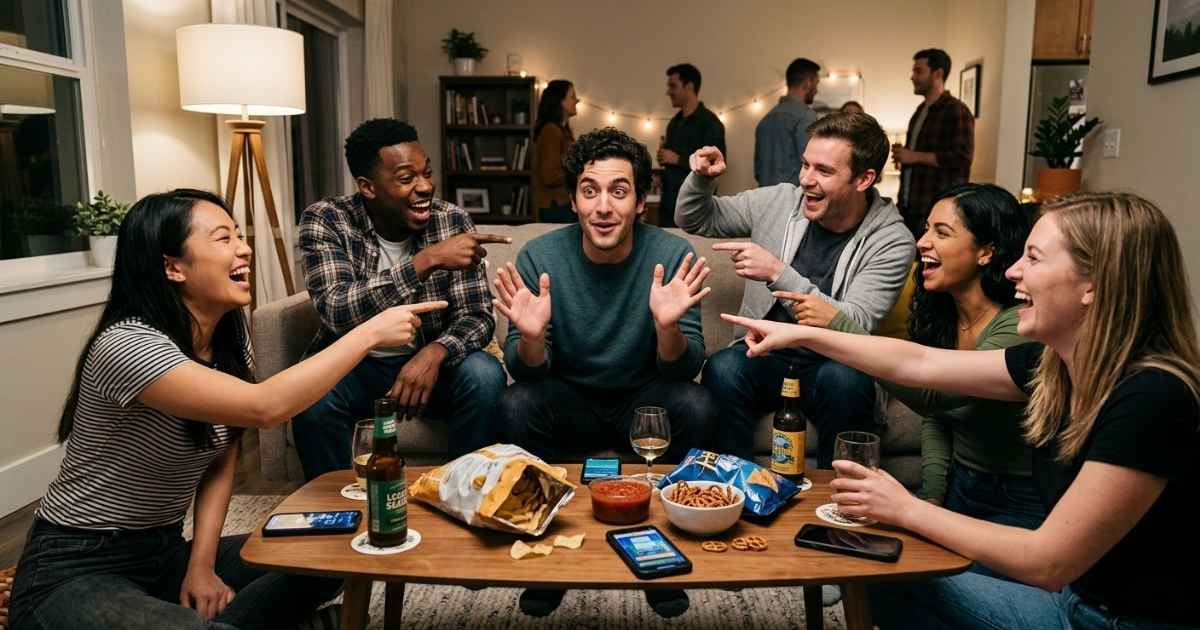
Nobody plans for Who’s Most Likely To to become a full-scale interrogation.
It starts harmlessly. Someone asks who’s most likely to survive a zombie apocalypse. Thirty seconds later, people are bringing up things that happened in 2018 like they’re presenting evidence in court.
Someone’s yelling. Someone’s fake-offended. Someone else is defending themselves way too aggressively for a game that technically has no stakes.
And somehow, that’s exactly why it still works in 2026.
Even now — when half of social life happens through muted notifications, Close Friends stories, archived chats, disappearing DMs, and “seen 2h ago” anxiety — this game cuts through awkwardness instantly. People stop curating themselves. They start exposing each other instead.
Especially after questions like:
- “Who’s most likely to accidentally screen-share something catastrophic?”
- “Who’s most likely to say ‘5 minutes away’ while still in the shower?”
- “Who’s most likely to order something from TikTok Shop and regret it before it even arrives?”
That’s the real magic of the game.
One question suddenly turns your quiet friend into the prime suspect for surviving the apocalypse purely because “they give off resourceful energy.” Meanwhile the organized one gets accused of panic-ordering emergency snacks during minor inconveniences.
Logic disappears fast.
“The funniest part isn’t the question. It’s watching people defend themselves like their reputation depends on it.”
These Who’s Most Likely To questions work because they create instant reactions. No setup. No awkward icebreakers. No pretending to be interesting.
People laugh, expose each other, overshare accidentally, and revive old group-chat lore within minutes.
And honestly? In 2026, when everyone’s tired of overthinking social interactions, games that force real reactions feel weirdly refreshing again.
Who’s Most Likely To Questions for Friends
Friend groups are dangerous because everyone already has evidence ready.
Nobody forgets anything anymore. Not the blurry concert video. Not the voice note meltdown. Not the time someone sent a paragraph, deleted it instantly, then claimed it was “an accident.”
One suspicious memory is enough to permanently shape someone’s reputation.
“Friend groups don’t need proof. They need confidence and one blurry memory.”
Funny Questions for Friends
- 😂 Who’s most likely to laugh during a serious moment?
- 📱 Who’s most likely to text “on my way” while still choosing an outfit?
- 🍕 Who’s most likely to secretly eat everyone else’s snacks?
- 🎤 Who’s most likely to confidently sing the wrong lyrics?
- 📦 Who’s most likely to buy something from TikTok Shop at 1 AM?
- 🎧 Who’s most likely to replay one song until everyone hates it?
- 🧃 Who’s most likely to spill their drink immediately after getting it?
- 📸 Who’s most likely to take 400 photos and post none?
- 🚗 Who’s most likely to miss the exit while actively giving directions?
- 🐶 Who’s most likely to ignore humans and bond with a random dog first?
- 💬 Who’s most likely to type a long message, then delete it?
- 🛒 Who’s most likely to start a new hobby after watching one video?
The best moments happen when the entire group points at the same person instantly.
That level of agreement is honestly terrifying.
And somehow, the accused person still acts shocked every single time.

Who’s Most Likely To Questions for Couples
Couples always think these questions will be easy.
Then suddenly everyone learns who starts fake arguments over “tone,” who says “I’m fine” while visibly not fine, and who steals fries after claiming they weren’t hungry.
Relationship versions work because tiny habits become public evidence immediately.
Especially in front of other people.
Funny Couple Questions
- ❤️ Who’s most likely to forget an anniversary?
- 🍟 Who’s most likely to steal food after saying “I don’t want anything”?
- 📺 Who’s most likely to secretly binge-watch the show alone?
- 📱 Who’s most likely to send 14 texts during one minor inconvenience?
- 🚩 Who’s most likely to overanalyze a two-word reply?
- 🛍️ Who’s most likely to overspend while “just browsing”?
- 😴 Who’s most likely to fall asleep during movie night?
- ✈️ Who’s most likely to randomly suggest moving abroad?
- 🎁 Who’s most likely to secretly plan something thoughtful?
- 📦 Who’s most likely to track a package every seven minutes?
- 🍜 Who’s most likely to steal fries after saying they weren’t hungry?
- 😅 Who’s most likely to apologize first just to end the argument?
Most couple answers happen immediately.
The real debate starts when both people think the other one is worse.

Who’s Most Likely To Questions That Start Arguments
Some questions instantly divide the room.
Not because nobody knows the answer — but because everyone thinks they’re correct.
This is where the game becomes chaos.
People start interrupting each other. Ancient stories resurface. Someone brings up an incident nobody has mentioned in years. Suddenly the room sounds less like a party and more like a reality-show reunion episode.
Questions Guaranteed to Cause Chaos
- 😅 Who’s most likely to survive longest in the wilderness?
- 💰 Who’s most likely to become rich unexpectedly?
- 📵 Who’s most likely to ignore messages for three business days?
- 🧠 Who’s most likely to secretly judge everyone?
- 🎬 Who’s most likely to become famous accidentally?
- 🚨 Who’s most likely to get banned from somewhere for something stupid?
- 🧳 Who’s most likely to miss a flight while already at the airport?
- 📱 Who’s most likely to accidentally expose themselves during screen-sharing?
- 🎤 Who’s most likely to start drama without realizing it?
- 🍔 Who’s most likely to order food twice in one night?
- 🏝️ Who’s most likely to disappear and “start over somewhere quiet”?
- 💤 Who’s most likely to sleep through an emergency alert?
The louder people defend themselves, the funnier the answer usually is.
Especially when they start saying things like:
“That happened ONE time.”
Which always means it definitely happened more than once.

Why This Game Still Works in 2026
Most party games die because they feel forced.
Too many rules. Too much setup. Too much secondhand embarrassment.
But Who’s Most Likely To survives because reactions happen instantly.
No tutorials. No strategy. Just immediate chaos.
And weirdly, that feels refreshing now.
People already spend half their social lives filtering themselves through captions, Notes apps, private stories, muted chats, and carefully timed replies. This game does the opposite. It forces people to react before they can curate themselves.
That’s why the funniest moments always feel accidental.
Someone gets exposed for leaving 97 unread texts. Someone else gets unanimously voted “most likely to accidentally join a cult.” Another person realizes the entire group sees them as the one who’d absolutely get stranded in another country after missing one train.
And honestly?
Most of the fun comes from how personal the answers become for absolutely no reason.
“The game gets better the moment people stop trying to sound cool.”
That’s usually when the night becomes memorable.

Who’s Most Likely To Questions Worth Saving
The best Who’s Most Likely To questions don’t just fill silence.
They create inside jokes people bring up months later.
One ridiculous answer becomes:
- a permanent nickname,
- recurring group-chat evidence,
- or a story nobody lets you escape from again.
Whether it’s a birthday party, road trip, beach weekend, sleepover, couples night, college hangout, or random 1 AM conversation that somehow lasts until sunrise — these questions work because they make people drop the performance for a minute.
Nobody’s trying to sound polished anymore.
They’re just arguing passionately about who would absolutely lose a fight against a chicken.
And honestly?
Every friend group already knows exactly who it is.
Leave a Reply